
Saturation Mailing vs. EDDM: Which Neighborhood Mail Strategy Wins?
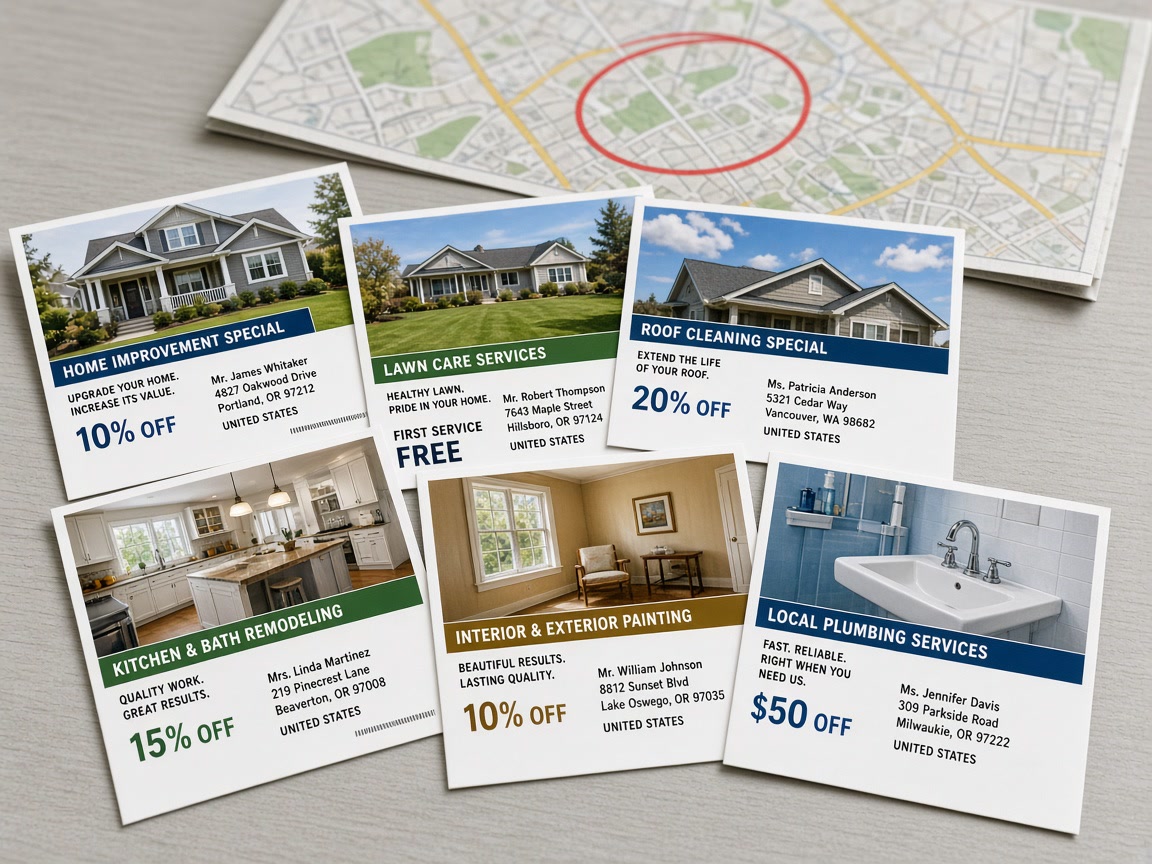
Same routes. Different prep, targeting, and often a different total cost.
When someone asks for an “EDDM quote,” what they usually want is simple: hit every door in a neighborhood. That is a smart goal for restaurants, schools, nonprofits, remodelers, and local retailers. The question is whether USPS Every Door Direct Mail (EDDM) is the best way to get there, or whether a saturation mailing list on those same carrier routes does the job better.
Most of the time, saturation is the better recommendation.
What EDDM actually is
EDDM is a USPS program built for neighborhood coverage without buying a mailing list. You pick carrier routes in the USPS map tool, print flats that meet EDDM size and weight rules, and address them with a simplified line such as “Postal Customer” or “Local Postal Customer.” The carrier delivers one piece to each delivery point on the routes you selected.
That simplicity is the appeal. No names. No street addresses on the piece. No list purchase.
The tradeoffs show up when you look at what you are paying to print and mail.
What a saturation mailing is
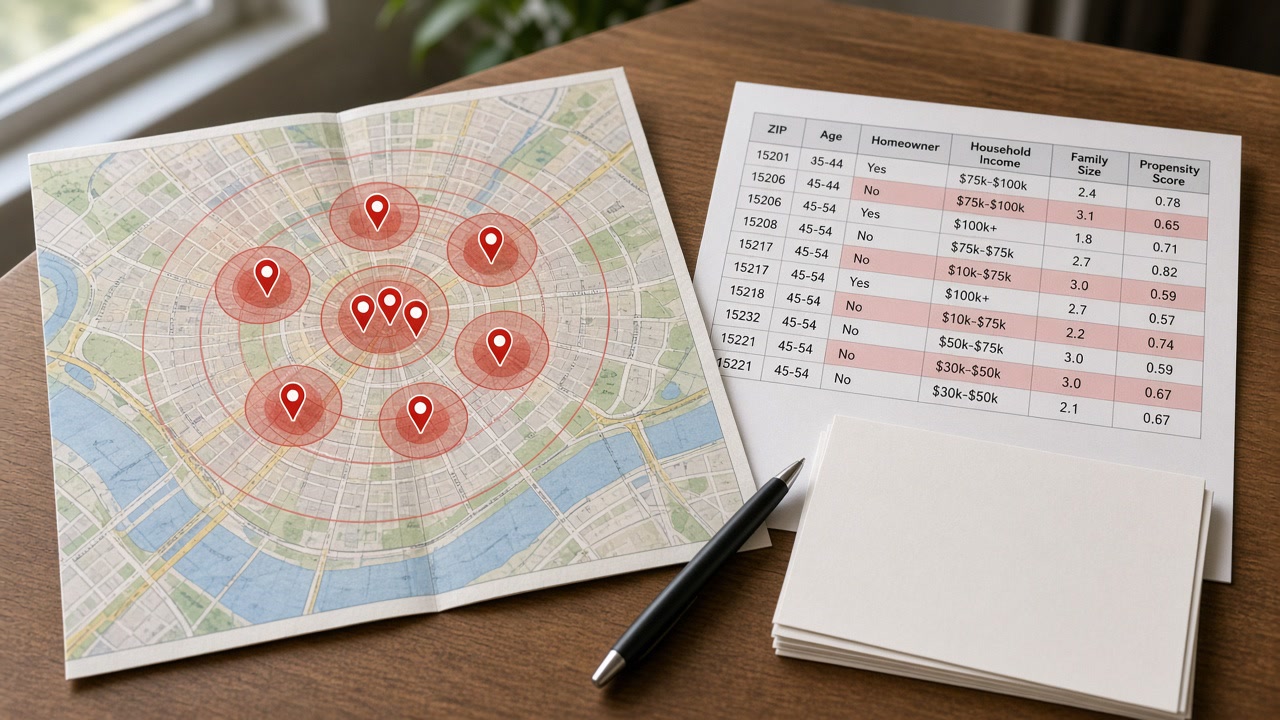
Saturation mail is still direct mail. The difference is the target: instead of buying a list of named people by age or income alone, you pick geography first, usually USPS carrier routes around a store, campus, or neighborhood. Those routes come with the demographics of the people who live there. Income, household mix, and similar traits follow the map you choose.
From there, you purchase the addresses on those routes, sorted in carrier walk sequence. The pieces are addressed (street address, and often an occupant or household line). When the mailing meets USPS density rules for the route, it can qualify for carrier-route saturation Marketing Mail postage, which is among the lowest commercial rates available.
In short: choose the neighborhoods that match your customer, then mail almost every occupied address on those routes, with a real address file you can clean and control.
Why saturation usually beats EDDM
1. The mail looks more personal
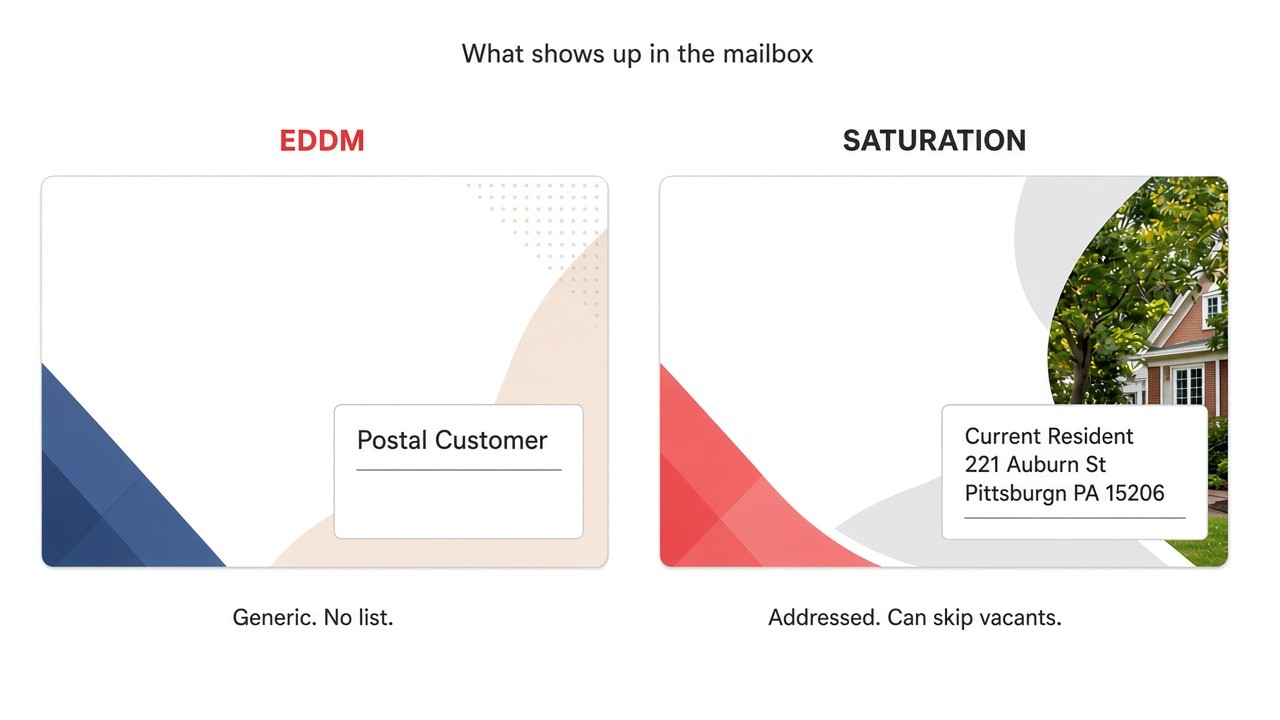
EDDM pieces are not addressed to a household. Saturation pieces are. A postcard that shows up with a street address (and often a resident or “Current Resident” line) feels less like bulk neighborhood junk and more like mail meant for that house. For local offers, that difference matters.
2. You can avoid printing and postage for addresses you do not want
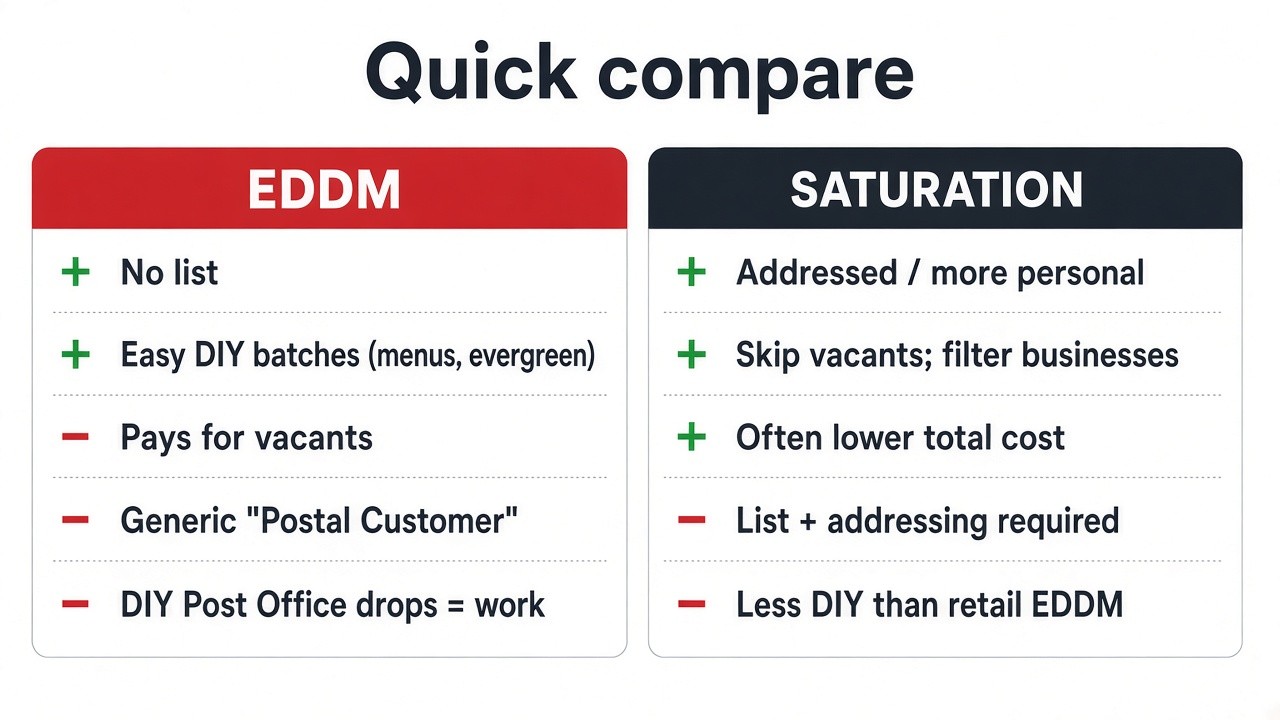
With EDDM, quantity is driven by the delivery-point counts on the routes you select. You mail the whole route as USPS defines it. There is no address file to scrub, so you cannot pull out vacant deliveries before you print. That means you pay to print and postage pieces that will never reach an occupied household.
With a saturation list, good list hygiene can suppress known vacant / no-stat addresses and other undeliverables. Fewer wasted pieces means less printing and less postage.
3. You can include or exclude businesses
EDDM coverage follows the route’s delivery points. Depending on entry method and simplified-address format, business stops may be included when you only wanted homes (Retail EDDM in particular is built around whole-route delivery).
A saturation list can be pulled as residential-only, business-only, or both. If your offer is for homeowners, you should not be forced to print a piece for every shop on the route.
4. Total cost is often lower
People compare EDDM postage to saturation postage line by line and miss the bigger math. Saturation usually wins on total project cost when you:
- print fewer pieces (no vacants, and businesses excluded when they do not belong),
- still qualify for deep carrier-route postage discounts, and
- keep list + addressing cost modest relative to what you save on print and postage.
Once print, list, addressing, and postage are added up, saturation is often the better value.
When EDDM can still make sense
EDDM shines when the piece itself does not change often. Restaurant menus, evergreen promo cards, and similar items are a good example: print a larger quantity while the creative is current, store the inventory, and mail smaller batches yourself over time. You buy print once, then drip neighborhood coverage as you need it.
That DIY path only works if you are willing to do the USPS side yourself. That means filling out the EDDM paperwork, bundling by carrier route, and delivering the mail to the destination Post Offices that serve those routes. It is doable. It is also a lot of work, especially when you are covering multiple ZIP Codes or several drop locations.
If you want coverage in a defined trade area, start with the map: which routes sit around your offer, and do those neighborhoods look like your customer? Saturation is how you turn that geography into addressed direct mail. Send us the details and we can pull route counts for the area you have in mind.